There is a reason so many great suspense stories happen near the water. A coastline is a border between the known and the unknown. On one side is solid ground, home and the rules of ordinary life. On the other is a vast, indifferent ocean that can carry you to the far side of the world or swallow you without a trace.
My novel, The Typhoon Coast, takes its name from a stretch of California shoreline and ends in the islands of the Philippines as a volcano erupts and a typhoon closes in. The sea runs through every chapter. Here is why coastal settings make such powerful thrillers, and how writers can use them.
The Sea Is a Character
The ocean is not a passive backdrop. It has moods, moving from glassy calm to violent fury in hours. It hides things and gives them back on its own schedule. It is beautiful and deadly at the same time, and it does not care about anyone’s plans.
Treat the sea like a character with its own agenda. Let it help your hero one moment and threaten them the next. Let it reveal a clue at low tide and hide it again when the water returns. When the setting has a will of its own, every scene near the water carries an undercurrent of danger.
Loss and the Ocean
For Trent McShane, the ocean is personal. As a ten-year-old boy, he watches his mother swept away from California’s Typhoon Coast into the Pacific, never to be seen again. From that moment on, the sea is both a wound and a promise. It took the person he loved most, and it points the way across the world to the treasure he will chase for the rest of his life. A setting that is tied to a character’s deepest loss becomes far more than scenery.
Storms Raise the Stakes
Few things escalate a story like weather. A storm turns ordinary tasks into life-or-death struggles. Roads flood. Power fails. Boats cannot leave the harbor. Rescuers cannot get through. Characters who might have escaped are suddenly trapped together with whatever threat they have been avoiding.
Storms also make wonderful ticking clocks. Readers understand instantly what it means when a hurricane or typhoon is approaching. Every hour of delay becomes painful, and every decision carries more weight.
When Nature Piles On
The 1991 eruption of Mount Pinatubo in the Philippines was devastating on its own. But a typhoon struck in the same violent week, and its rain mixed with falling ash into a heavy blanket that collapsed roofs and turned roads to mud. Two disasters compounded each other. In The Typhoon Coast, that convergence threatens to bury the Golden Lily Treasure forever and pushes every character to the edge. When you want to test your characters, consider letting nature pile on.
Typhoon Country
Typhoons are the Pacific’s version of hurricanes, and the Philippines sits squarely in their path. Island communities there have long lived with powerful storms that arrive year after year, bending palms flat, driving surf over seawalls and forcing fishermen to haul their boats high above the waterline. People prepare, endure and rebuild, often with remarkable resilience.
For a writer, typhoon country offers a setting where danger is woven into ordinary life. Characters know the signs: the strange calm, the color of the sky, the swell arriving before the wind. They know what it costs to wait too long. Bringing that knowledge into a story lets readers feel the weight of a storm before it even hits.
Isolation Breeds Suspense
Coastal places are often remote. A lighthouse on a headland. A fishing village at the end of a long road. An island reachable only by boat. When the weather turns or the ferry stops running, those places are cut off from the outside world, and the people in them have to deal with whatever comes alone.
That isolation is a classic thriller ingredient. There is no backup, no quick escape and no easy way to call for help. Characters have to rely on their own skills and on each other, and readers know that if something goes wrong, nobody is coming.
The Locked Room by the Sea
A storm-bound island or a cut-off coastal town works like a locked room mystery on a larger scale. The suspects are all present. The exits are closed. Tension builds naturally as people realize that the threat may already be among them.
Smugglers and Hidden Coves
Wherever there is a coastline, there are people moving things they should not. Rocky coves, hidden inlets and long stretches of empty shore have always attracted smugglers, from the wreckers and contraband runners of old Cornwall made famous in novels like Jamaica Inn to the rum-runners who landed illegal liquor along the California coast during Prohibition.
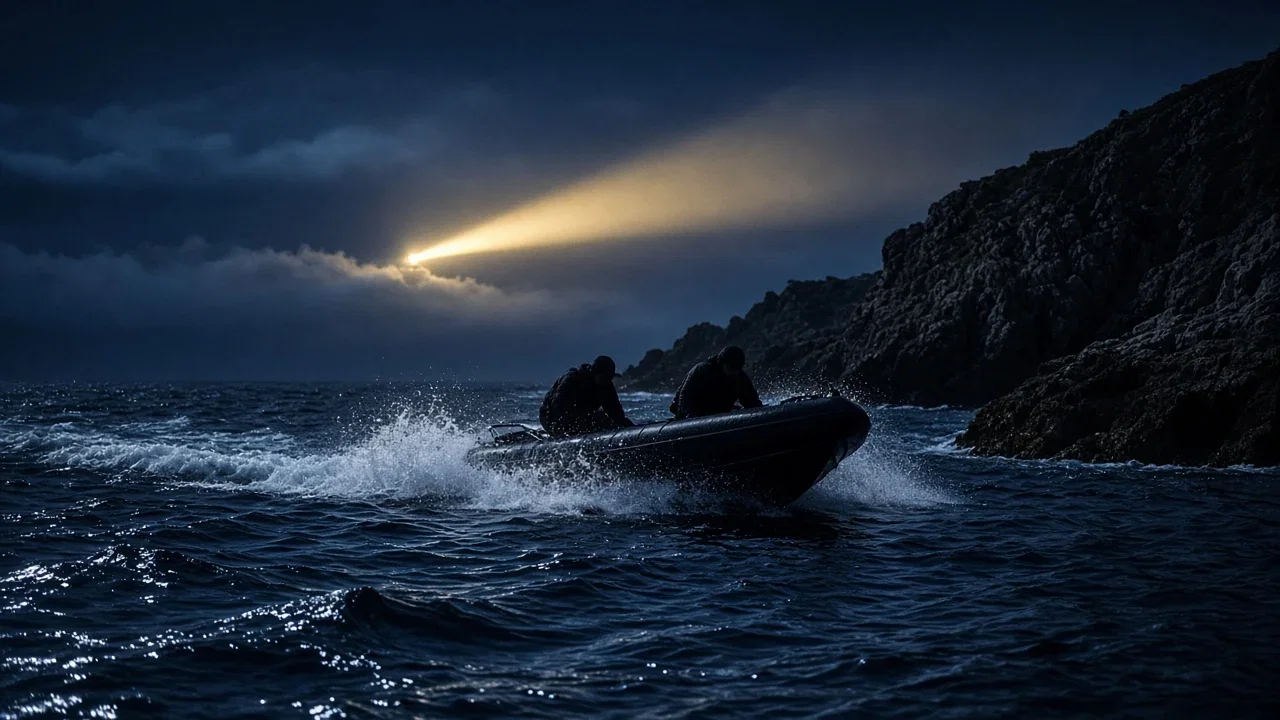
Smuggling brings built-in tension: secrecy, money, danger and conflict with the law. A boat running without lights through a dark cove at night is instantly suspenseful. Readers want to know what is on board, who is waiting on the beach and who might be watching from the cliffs.
Treasure From the Sea
Treasure stories and coastlines go together naturally. Shipwrecks, buried hoards and objects carried across oceans have fueled adventure fiction for centuries, from Treasure Island onward. In The Typhoon Coast, the legend of the Golden Lily Treasure, said to be hidden by Japanese forces in the Philippines at the end of World War II, pulls Trent and Eddie from the beaches of California to the jungles across the Pacific. I have written more about the legend in The Golden Lily Treasure.
Harbors and Port Towns
Port towns are crossroads. Sailors, fishermen, traders, travelers and people running from something all pass through. That constant churn creates a perfect environment for intrigue. Strangers arrive and leave without explanation. Information is bought and sold in waterfront bars. Loyalties shift with the tides.
For generations of American sailors and Marines, Olongapo City, just outside the gates of what was then the U.S. Naval Base at Subic Bay, was one of those crossroads: loud, crowded and wild. In the novel, it is one of the three streets that shaped Trent McShane, and the place from which he eventually disappears. You can read more about those crossroads in A Passport to Immortality.
The People of the Coast
Coastal settings come with their own communities, and those communities are full of story. Fishing families who have worked the same waters for generations. Harbor masters who know every boat and every rumor. Beachcombers who walk the tide line at dawn. Coast guard crews and lifeguards who run toward the danger everyone else is fleeing. Each brings a distinct voice, a set of skills and a relationship with the sea that can help or hinder your hero.
These people also know things outsiders do not: which cove floods at high tide, which reef has claimed boats, which stranger arrived last week and has been asking too many questions. A local character who reads the weather better than any forecast can become an invaluable ally, or a frightening adversary.
Rescuers as Characters
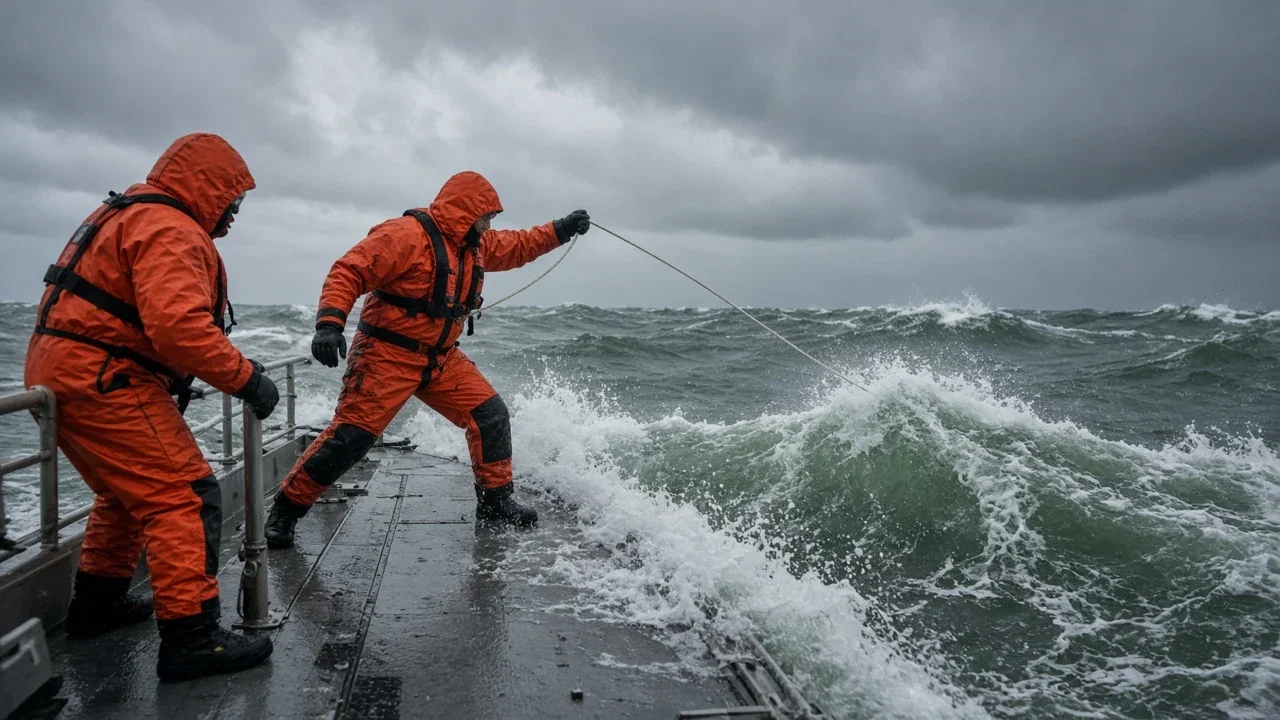
Rescue crews are some of the most compelling figures in coastal fiction. They work in the worst conditions by choice, and their courage is quiet, stubborn and usually unrecognized. Including them adds another layer of tension and heroism to a storm sequence, and reminds readers that the sea’s danger is real.
Using the Senses
Coastal settings are rich with sensory detail, and those details pull readers deep into a scene. The salt smell of the air. The cold slap of spray. The sound of a foghorn or the bell of a buoy. The taste of brine on cracked lips. The feeling of wet sand giving way underfoot.
- Sound: crashing surf, wind in rigging, gulls, groaning hulls
- Smell: salt, diesel, seaweed, fish, rain on hot pavement
- Touch: spray, wind, cold water, rough rope, slick rocks
- Sight: shifting light, fog banks, whitecaps, the horizon tilting on a boat deck
Fog and Darkness
Fog is one of the most useful tools a coastal writer has. It shrinks the world to a few yards, hides threats and makes familiar places strange. Darkness on the water is even more disorienting. Without landmarks, a character on a boat at night can lose all sense of direction. Both create fear by taking away what the character, and the reader, can see.
Water as Danger and Escape
The sea offers both a way out and a way to die. A boat can carry your hero to safety or capsize in the surf. A dive beneath the waves can lose a pursuer or end in drowning. Tides can open a path along the beach and then cut it off.
That double nature is dramatic gold. Every time your character turns to the water, the reader should wonder whether it will save them or kill them. Make the sea’s power real, and the reader will feel every wave.
Respect the Sea in Your Research
Writers who have not spent time on the water often underestimate it. Cold water can incapacitate a person in minutes. Rip currents pull even strong swimmers away from shore. Small boats in heavy seas are violent, exhausting places to be. Talk to sailors, fishermen and rescue crews, and read accounts of real storms and rescues before writing your big ocean scene.
Coastal Beauty Makes Danger Hit Harder
One more reason coastlines work: they are beautiful. Sunsets over the Pacific, tide pools full of life, sea glass glowing on the sand. That beauty makes danger more shocking. When a peaceful beach becomes the scene of a tragedy, the contrast hits readers hard.
Bean Hollow Beach, south of San Francisco, is a place where families come to hunt for sea glass while fishermen wait at their long poles. It is also a place where the Pacific flashes on the rocks with real force. That combination of wonder and peril is exactly why the novel begins there.
Find Your Coast
If you are writing a thriller, consider what the water could add to your story. A storm that traps your characters. A cove where something is hidden. A harbor full of strangers. A sea that took something from your hero and might take more. Coastal settings offer isolation, danger, beauty and mystery all at once.
To explore the coastline and history behind my own story, visit About the Typhoon Coast.